







PCB Reverse Engineering
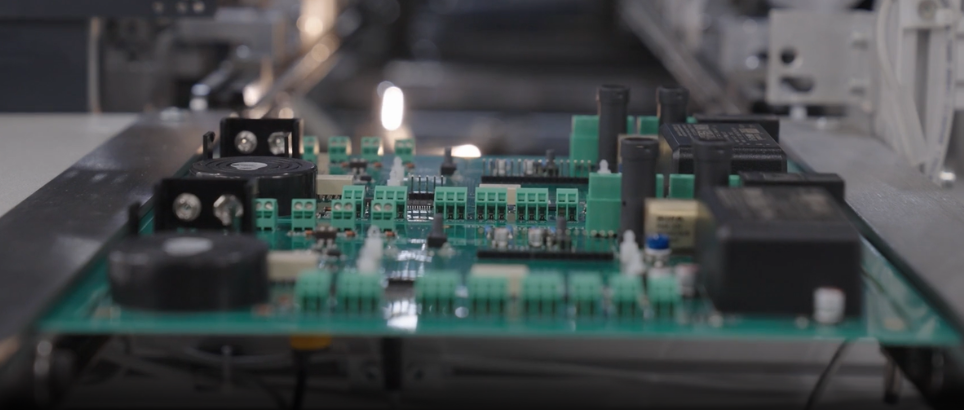
Rebuild a board when the original design data no longer exists
If you have a working board, a faulty board, or a finished product and need more of the same producing, but the original CAD files, schematics, or manufacturer are no longer available, our reverse engineering service recreates it from the physical board itself.


How ABL Circuits Reverse Engineers a Board
We start by removing every component from the board and calculating its value.
This is usually the hardest and most time-consuming part of the job, since components are often obsolete and we need to source a working alternative.
Once we've compiled a full Bill of Materials, we move on to the board layout itself. For a single or double-layer board, we measure and redraw the layout directly on our CAD software. For multi-layer or more complex boards, we x-ray the board first to get an exact reading of the internal layout before reconstructing it in CAD.
That CAD data is then used to photo-plot and manufacture new boards, without the cost and delay of sourcing obsolete original components. The new board is built to function the same, or often better, than the original.
Why the New Board Isn't an Exact Replica
Copying a board exactly would mean tracking down the same components originally used, many of which are no longer in production. Instead, we substitute in readily available, improved components where needed, so the new board performs the same job, sometimes better, without the cost and delay of hunting down obsolete parts.
Depending on the components involved, there may be very slight differences in layout, though this doesn't affect how the board performs.
Where a board design is protected by copyright, we won't reproduce another company's work.
One recent job involved recreating 17 different rack-mounted PCBs originally designed in the 1980s, boards that controlled safety systems including valves, sprinklers, and detectors. With no current manufacturer to turn to and original documentation long gone, each board took our engineers 40 to 50 hours of reverse engineering work to rebuild from the physical originals. - Will Leverett
Key Differences Between SMT and THT Assembly
PCB assembly uses two main techniques:
Surface Mount Technology (SMT)
SMT components are soldered directly onto the board’s surface, offering:
1
Often using Pick and Place machines.
2
Ideal for compact, high-density designs.
3
Connections may be weaker under stress.
Through-Hole Technology (THT)
THT involves inserting component leads through drilled holes for a stronger connection:
1
Ideal for high-vibration or high-power applications.
2
Additional drilling and soldering steps required.
3
Due to lead-based design and extra material.
Related Case Studies


How complex is the reverse engineering process?
Can you copy any PCB I bring you?
Will the new board be identical to the original?
What lead times can I expect?
Looking for a bespoke manufacturing solution?
See how ABL Circuits can help you today:
Quick Quote
Alternatively, for a quick overview, fill out the basic form to the right.
ABL Circuits have offered a state of the art PCB Manufacturing Service for over 40 years.


ABL Circuits Ltd Icknield Way,
Baldock Hertfordshire, SG7 5BB
United Kingdom


