






News, Blogs & Articles
A Step-by-Step Guide to the New Product Introduction (NPI) Process
Case Study
March 3, 2026
By Will Leverett | Connect on LinkedIn
Most articles about New Product Introduction describe a tidy, linear process. A flowchart. A Gantt chart. Eight clean phases with clean handoffs.
That is not what NPI actually looks like.
What it actually looks like is a compressed, high-stakes sprint where the difference between a smooth launch and a three-month delay is often a 30-second phone call - or the absence of one.
We've run hundreds of NPI programmes at ABL Circuits. This is often how the first stages unfold in practice: what we do, what can go wrong, and what our clients can do to avoid costly delays.
First, a Word on Timelines
For some NPI programmes - particularly those involving complex multilayer boards, medical-grade requirements, or long-lead specialist components - eight weeks is realistic. For many of the projects we handle, it's considerably faster. So the timeline you'll read below is not a fixed process; it's a map of the decisions and milestones you'll encounter, compressed or expanded depending on the complexity of your project.
What never compresses is the sequence. The order in which things happen matters enormously, and getting ahead of the right problems at the right time is the entire art of NPI.
Step 0: Get Us Involved Before You've Finished the Design
Most clients come to us with a completed design. That's fine - we work with it. But the clients who get the smoothest NPI programmes, the fastest timelines, and the lowest costs are the ones who bring us in earlier.
Before your design is locked, we can add real value. We can ask the questions your design team might not be thinking about from a manufacturing perspective: Is this footprint going to cause solder bridging at volume? Is this connector going to be accessible once the board is in the enclosure? Is this component available, or is it already on a 52-week lead time?
These are not difficult questions to answer at the design stage. At the manufacturing stage, they become expensive ones.
If you're starting a new product and you want a CEM involved from the outset rather than handed a finished design to execute, that conversation is worth having early. It costs nothing and routinely saves weeks.
Step 1: The Job Pack Hits the Floor
The single most important thing that happens in Week 1 is what happens in the first few hours.
At ABL, when a new NPI job comes in, it doesn't go to a committee or a scheduling queue. The job pack - your Gerber files, BOM, assembly drawings, and any supporting documentation - is open on a workstation and being actively interrogated from the moment it arrives.
We panelise your board immediately: working out how many units we can fit on a production panel to optimise material usage and reduce your unit cost. That calculation happens before anything else.
Simultaneously - and this is something clients often don't realise happens this early - our Procurement team is already checking component availability against your BOM.
Our buyers pull live stock data from DigiKey, Mouser, and Farnell the moment the job lands. But we don't stop there. After 44 years in the industry, we've built direct relationships with component manufacturers that many CEMs simply don't have - which means we can often source components directly, saving both time and cost when distributor stock is tight. If a microcontroller or power management IC on your BOM is showing low availability, we move on it before we've even finished the DFM check. We'd rather hold stock and be wrong than miss the window and delay your programme by twelve weeks waiting for a re-stocking run.
This is not a small operational detail. It is one of the primary reasons NPI programmes succeed or fail.
The Most Important Thing You Can Do Before We Start: Get Your BOM Right
If there is one piece of advice we give every client before an NPI programme begins, it's this: triple-check your Bill of Materials, and make sure every line has a manufacturer part number.
A BOM without manufacturer part numbers forces us to interpret your intent. We're matching component descriptions against distributor catalogues, making judgement calls on equivalents, and raising Engineering Queries on ambiguities that could have been resolved before the job even arrived. Every one of those queries adds time.
The most common BOM issues we see:
- Missing manufacturer part numbers - a description like "100nF 0402 capacitor or Red LED" can match hundreds if not thousands of components with different voltage ratings, temperature coefficients, and package tolerances
- Conflicting data between BOM and schematic - the BOM says one value, the schematic says another; both documents exist, and neither flags the discrepancy
- Footprint mismatches - a component is electrically correct but doesn't physically suit the footprint in the Gerber files; a generic 0603 footprint used for a component that requires a specific thermal pad geometry
None of these are catastrophic problems. All of them are avoidable. A thorough internal review of your BOM before you send it to us - with manufacturer part numbers on every line - is the single highest-value thing you can do to accelerate your NPI programme.
The Engineering Query Black Hole
Even with a clean BOM, we will typically raise at least one EQ (Engineering Query) of any NPI programme. It's not a sign that something has gone badly wrong - it's a sign that we're doing our job properly.
An EQ might be something like: "R1 is listed as a 10kΩ resistor in the BOM, but the schematic shows 100kΩ. Please confirm which value to build."
That query has a one-word answer. "10k." Or "100k." Thirty seconds of someone's time.
And yet, in our experience, EQ response lag is the single biggest avoidable delay in NPI. The client's lead engineer is in a product review meeting. Or on annual leave. Or they assume "production will figure it out." The job sits on hold waiting for a reply that could have been sent from a phone in a car park.
Our advice to every new client starting an NPI programme: give us a mobile number, not just an email address. A 30-second call resolves what an email thread drags out over three days. We are not precious about format. We will call, email, or send a carrier pigeon if it keeps your programme moving.
The same principle applies to decision-making more broadly. We see it regularly: a client asks for an urgent quote, takes three weeks to place the order, and then needs the boards in two days. If that same client had made the decision in week one, we'd have had two extra weeks to build properly — and the job would have cost less. Speed of decision-making on your side directly translates to lead time and cost savings on ours.
Steps 2–3: The First Build
Once the BOM is confirmed and components are secured, we move to first article build.
For a straightforward board, this can happen within the first week. For more complex assemblies - particularly anything involving fine-pitch BGA components, controlled impedance requirements, or multi-stage box build assembly - Before anything leaves our floor, every board goes through our internal inspection process:
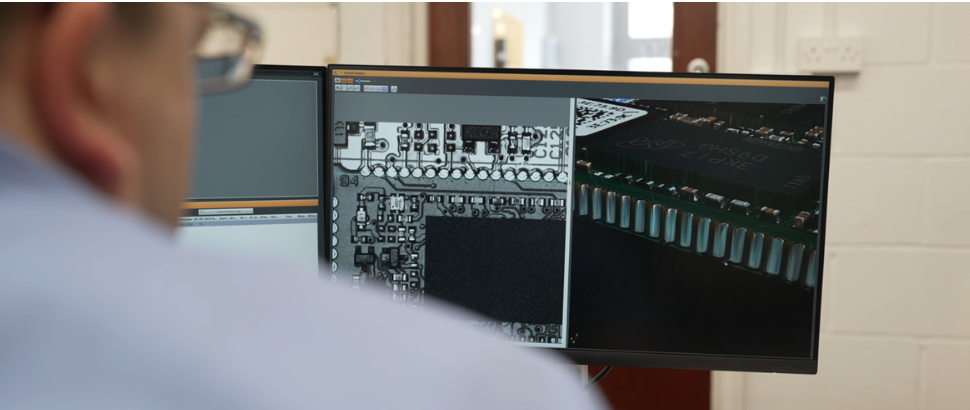
- 3D solder paste inspection post-stencil, confirming paste deposit volume and position before any components are placed
- AOI (Automated Optical Inspection) checking component placement, orientation, and solder joint quality against your BOM and assembly drawings
We don't issue first article reports until the product has been delivered. What you receive is a finished, inspected assembly - not a work-in-progress sign-off request. Our quality checks happen internally, before anything ships.
Steps 4–5: Customer Evaluation and Feedback
Once you've received the first article assemblies, the next critical phase happens on your side.
This is where your engineering team takes the boards through functional testing, powers them up, confirms they meet your design requirements, and verifies that the product performs as intended. You're testing signal integrity, power sequencing, thermal performance under load - whatever your design calls for.
From our perspective, this is one of the most variable stages in an NPI programme. Some clients complete their evaluation within 48 hours and come back with immediate approval to proceed. Others need two weeks for internal sign-offs, particularly if the product requires compliance testing or multiple stakeholder reviews.
What we need from you at this stage is clear, actionable feedback:
Does the assembly work as designed? If yes, we're ready to move to volume production.
If there are issues, are they design-related or manufacturing-related? That distinction matters, because it determines what gets revised and who owns the change.
If changes are needed - a component swap, a value adjustment, a layout tweak - how quickly can you confirm the revision and send us updated documentation?
The faster you can complete this evaluation and communicate the outcome, the faster we can move into pre-production validation and full-scale manufacturing. This is where the timeline either accelerates or stalls, and it's almost entirely under your control.
Steps 6–7: Pre-Production Validation
By step 6, assuming first articles have been received and any design feedback incorporated, we move into pre-production validation.
This is where we stress-test the manufacturing process itself, not just the design. We're asking: can we build this consistently, at volume, within tolerance, with the yield rate your programme requires?
For a standard commercial PCB assembly, this is relatively straightforward. For anything destined for a safety-critical application - a medical device, a defence subsystem, or an EV power management assembly - this stage is significantly more rigorous.
Pre-production validation at ABL typically includes:
- Confirmation of IPC-A-610 class requirements (Class 2 for most commercial applications; Class 3 for defence, medical, and aerospace)
- First-off inspection against all acceptance criteria before the production run is released
- Final confirmation of component traceability records, particularly for any safety-critical parts
If you're working with us on a contract electronics manufacturing basis for the long term, this validation stage also feeds directly into our ongoing production process documentation - so that six months from now, when you order another batch, we're not starting from scratch.
Step 8: Production Release
Step 8, where it applies, is the transition from NPI to production.
This is often under-managed by clients. The NPI programme ends, the first production order is placed, and everyone breathes a sigh of relief. But there are a few things that need to happen explicitly at this handoff to avoid problems further down the line.
What a clean production release looks like:
- A fully version-controlled job pack, locked and approved, covering all Gerbers, BOMs, assembly drawings, test specifications, and any special instructions
- A confirmed approved vendor list (AVL) for all components, including qualified alternates where relevant
- Agreed acceptance criteria for production inspection - what pass looks like, and what fail looks like, in writing
- Lead time confirmation for all long-lead items, so your procurement team can plan re-order points in advance
What a messy production release looks like: the NPI team moves on, the production team receives a job pack that hasn't been updated since Revision B, and the first production batch is built to an outdated specification. We've seen it happen with other suppliers. It does not happen at ABL because our job pack control process doesn't allow it.
What Makes NPI Go Well
After running hundreds of these programmes, the pattern is consistent. NPI goes well when:
- Your data is clean and your design has been through at least a basic internal DFM review before it comes to us
- In stock and readily available components have been chosen during the design stage
- You treat first article feedback as a collaborative process, not a pass/fail verdict
- You plan component procurement as part of the NPI programme, not an afterthought
- You have a single named technical contact who can answer EQs within a few hours
And it goes badly when any of those things is missing.
Starting an NPI Programme with ABL
If you're approaching a new product introduction and you want a contract electronics manufacturer who will interrogate your data, we'd be glad to talk through what your programme requires.
Our NPI service covers everything from bare board manufacture through to full box build assembly, and our team works across commercial, medical, defence, and EV electronics applications.
You can find out more about how we work on our contract electronics manufacturing service page, or get in touch directly to discuss your project.
Will Leverett is the director at ABL Circuits, a UK-based contract electronics manufacturer specialising in PCB assembly, box build, and NPI programmes. Connect with Will on LinkedIn.
News, Blogs & Articles


.png)
News
How to Write a Design History File (DHF) When Your CEM Is Involved in Development
April 7, 2026
.png)
News
What a Box Build Specification Document Should Include (And What Most Forget)
April 1, 2026
.png)
News
Why JOSCAR Registration Matters When Choosing a Contract Electronics Manufacturer
March 19, 2026
ABL Circuits have offered a state of the art PCB Manufacturing Service for over 40 years.


ABL Circuits Ltd Icknield Way,
Baldock Hertfordshire, SG7 5BB
United Kingdom


